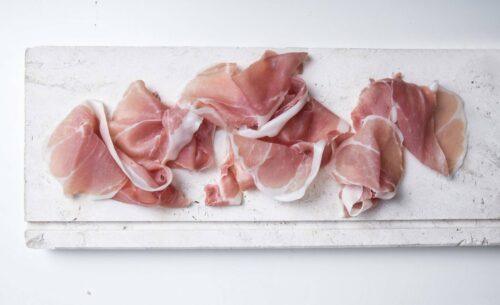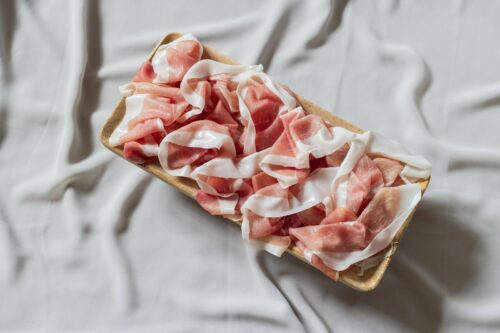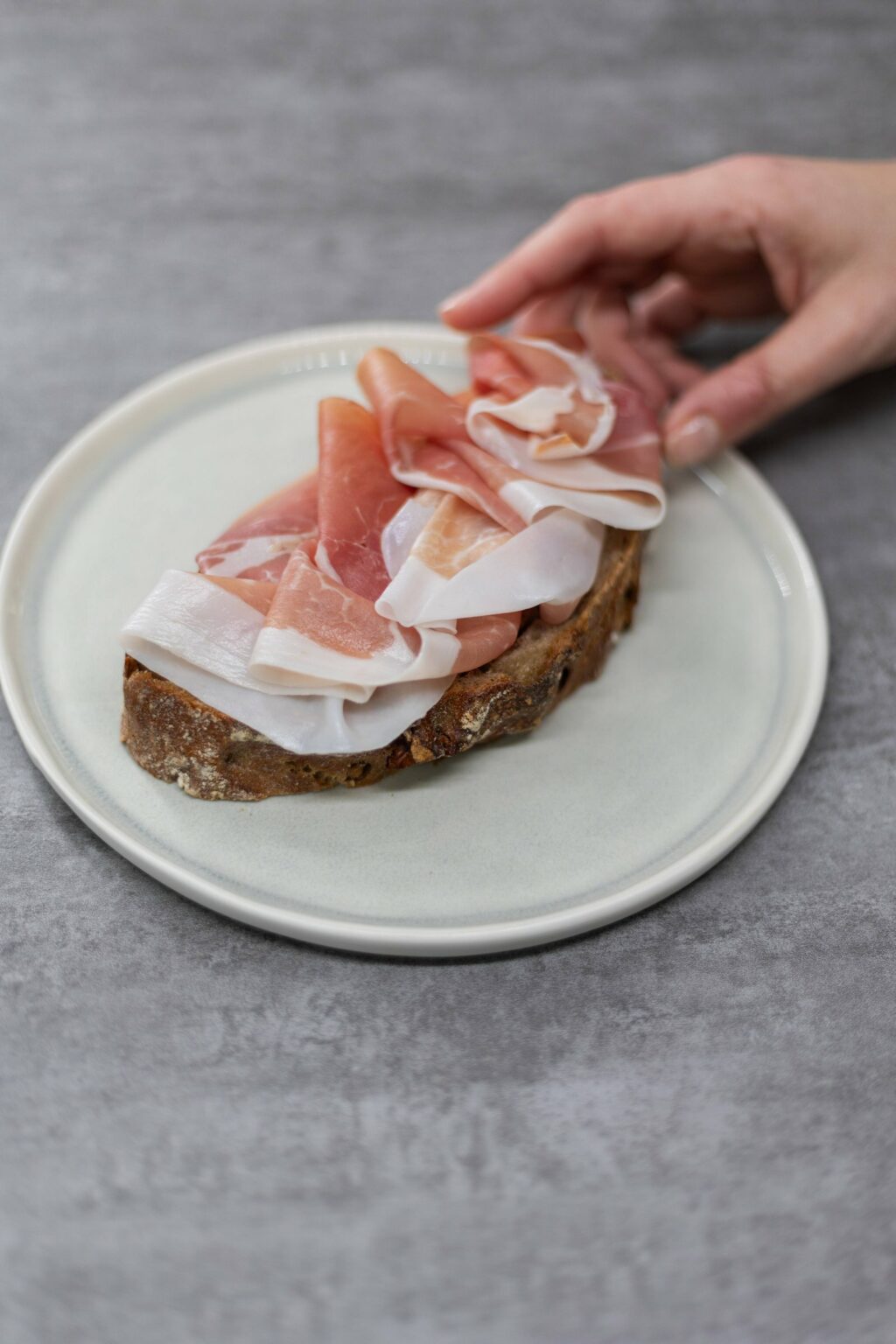
When you enjoy a slice of Prosciutto di San Daniele PDO, that thin strip of white fat along the edge is not a defect, nor is it an ‘excess’ that needs to be removed.
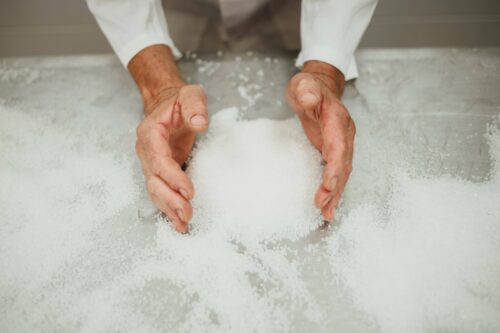
On the contrary! It’s an essential part of the product and an element that helps define an identity that is the result of genuine ingredients, a long curing process and a unique microclimate.
In this article, we analyse the role of the fat from two perspectives: the lipid profile and its organoleptic contribution.
The lipid composition of Prosciutto di San Daniele
Prosciutto di San Daniele PDO has a lipid content of between 18% and 23% of its total weight.
The average values per 100 g of product are the following:
total fat: 18–23 g,
of which 6.5 g saturated
of which 8.5–9 g monounsaturated (predominantly oleic acid)
and 2.5–3 g polyunsaturated (including Omega-6 linoleic acid and Omega-3)
A 50 g portion of Prosciutto di San Daniele with fat contains the same amount of linoleic acid as 100 g of salmon.
Linoleic acid is a fatty acid necessary for cell membranes and the reduction of LDL cholesterol and an essential nutrient that must come from the diet.
So, is the fat in Prosciutto di San Daniele good for you?
The importance of good fats in Prosciutto di San Daniele
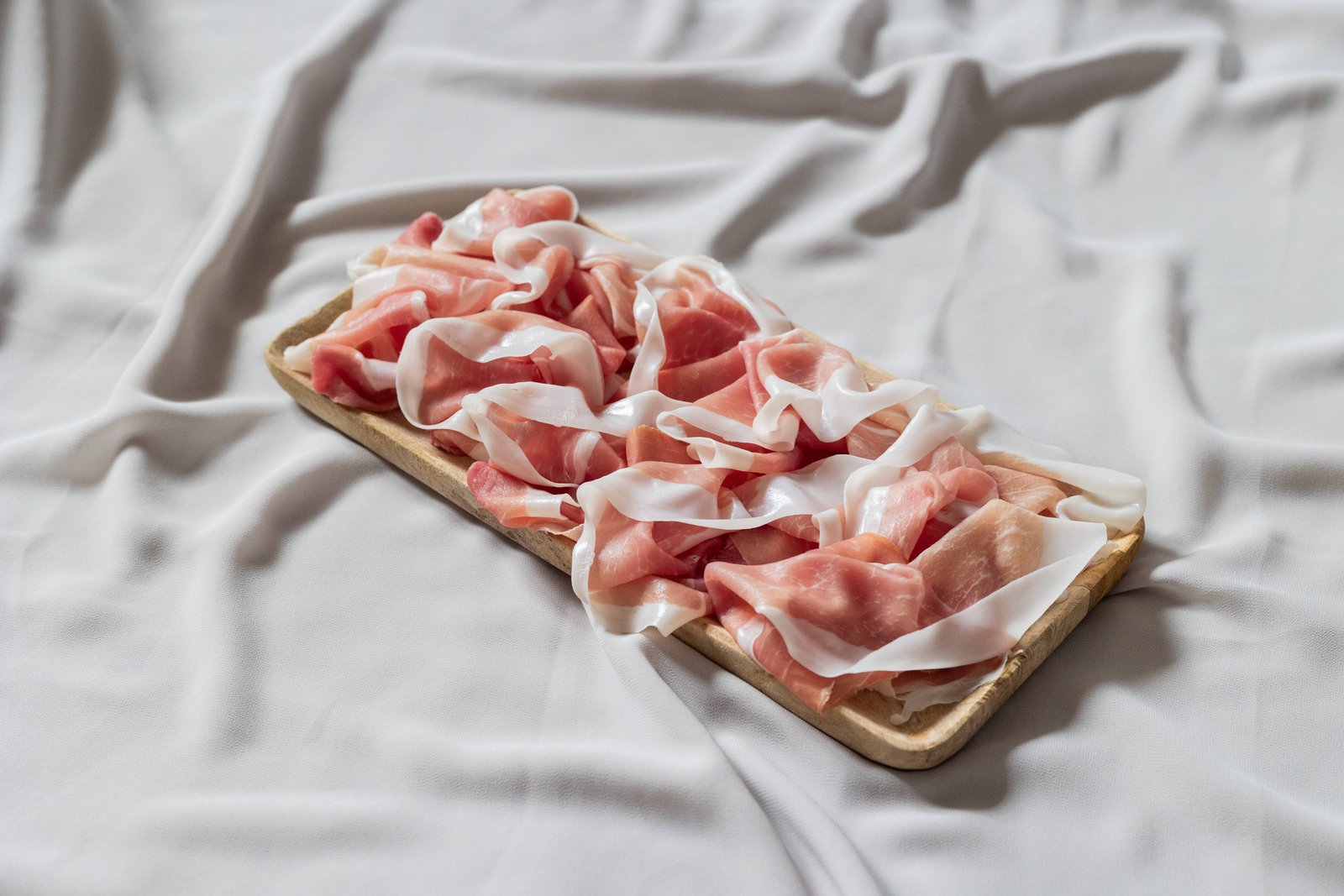
The visible fat, i.e. the white strip along the edge, is naturally rich in monounsaturated fats and has a fine, delicate texture that melts quickly in the mouth. This is why we can speak of ‘good fats’ when we describe Prosciutto di San Daniele PDO.
Our ham contains a significant amount of lipids, most of which are highly digestible unsaturated fatty acids that are beneficial to the body.
In particular, Prosciutto di San Daniele is rich in oleic acid, a monounsaturated fat also found in extra virgin olive oil, known for its beneficial effect in maintaining normal LDL cholesterol levels in the blood and thus contributing to cardiovascular health.
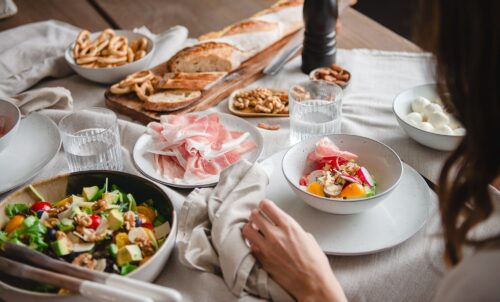
This profile is shared by other key ingredients of the Mediterranean diet, making it a natural and nutrient rich ally.
The fat also contains Omega‑3 and Omega‑6: two essential polyunsaturated fats that our body cannot produce on its own and that must come from the diet.
These play an important role in the functioning of the nervous system, heart health and the regulation of inflammatory processes, balancing the action of saturated fats.
Conversely, the proportion of saturated fats, which should be consumed in moderation, is lower.
The result is a balanced lipid profile, where the quality of the fats matters more than the total quantity.
Removing the visible fat would actually mean sacrificing these valuable elements, depriving the product of its nutritional potential and compromising its natural lipid balance.
Fat is therefore a key component for enjoying Prosciutto di San Daniele at its best.
The organoleptic characteristics of Prosciutto di San Daniele
The organoleptic characteristics of Prosciutto di San Daniele are defined by the PDO Product Specification and are assessed through sight, touch, smell, taste and aftertaste.
In this context, fat plays a central role, particularly in the following aspects:
- Sight: colour contrast
The pinkish red lean meat alternates with white fat, creating a distinctive visual profile that makes Prosciutto di San Daniele immediately distinguishable from other hams. - Touch: tenderness when sliced
The fat gives the slice its tender texture, which is noticeable both when sliced and on the palate. This is what prevents the ham from being too dry, while also enhancing its melt-in-the-mouth quality. - Taste and aftertaste: balance and persistence
The fat carries aromas and sweetness, modulates savouriness and harmonises flavours. It’s a fundamental element in maintaining San Daniele’s typical intense aroma and sweet taste with a distinct aftertaste. If the fat is removed, a significant part of the aromatic complexity is lost.
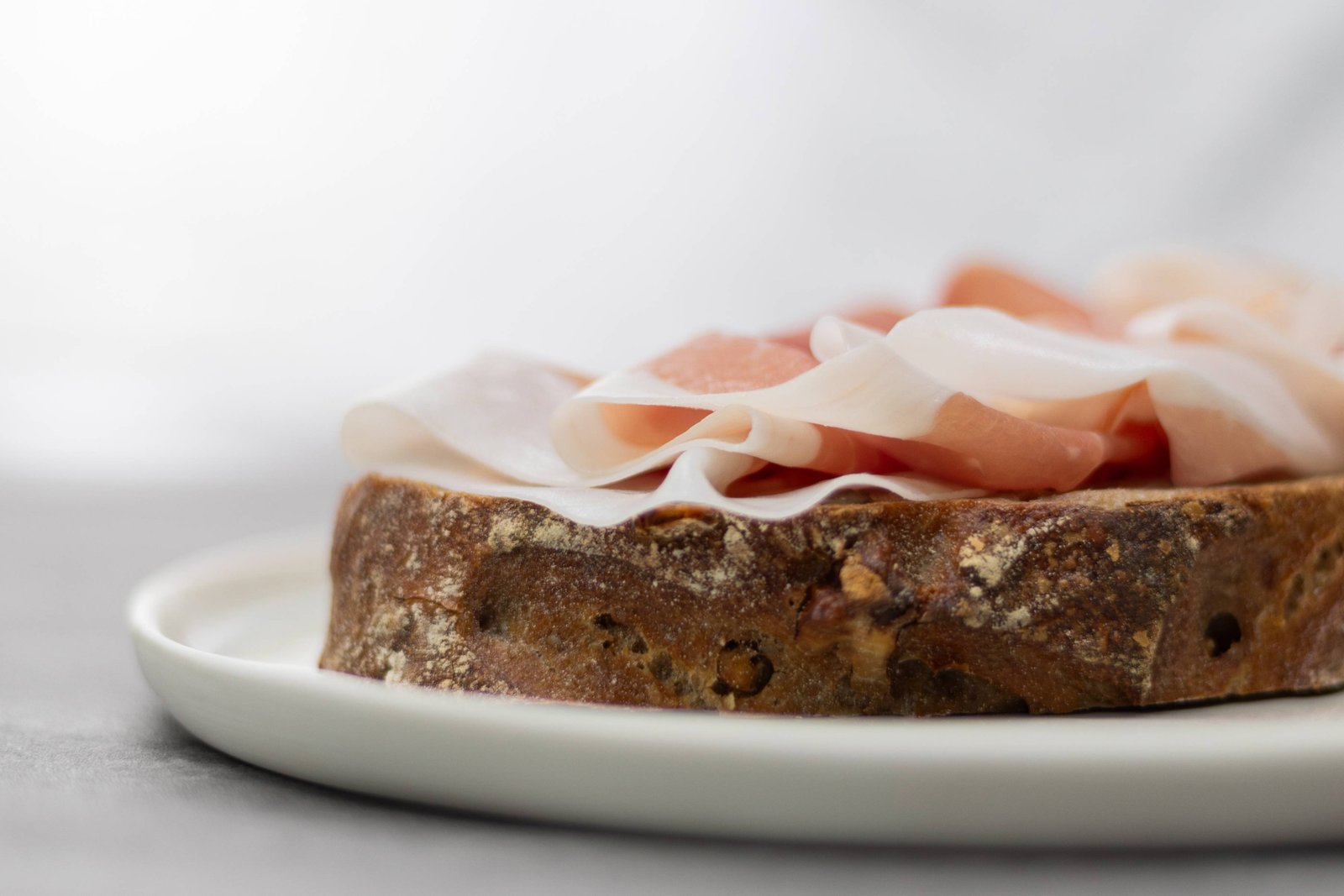
From a practical consumption perspective, removing the fat is counterproductive for three main reasons:
- Loss of flavour: the fat carries the aroma. Without it, the slice tastes flat and less flavourful;
- Altered texture: the tenderness disappears if only the lean (and drier) part is left;
- Incomplete nutritional value: removing the fat means foregoing the good fats naturally present in the food.
The conclusion? Enjoy it as it is!
The fat in Prosciutto di San Daniele is not an unnecessary element to be discarded, but an essential part of the product. It contributes to its balanced nutritional profile, defines its organoleptic characteristics and ensures that you can fully enjoy the sensory experience that has made this ham famous throughout the world.
When you think of Prosciutto di San Daniele, you think of how it melts in the mouth, its aroma, and the lasting sweetness that lingers even after the first bite.
So, next time you taste it, enjoy it as it is: savour it in its entirety and enjoy every slice!